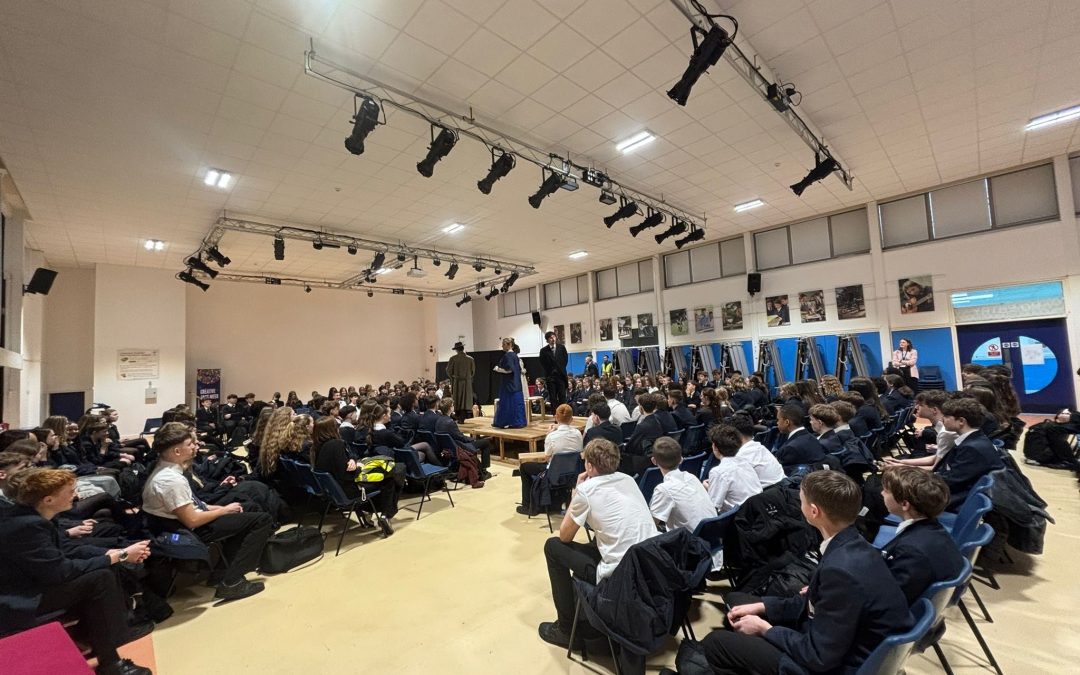
This week at The Hamble School has been an exceptional celebration of creativity, hard work and community spirit. Creative Arts Week has been truly amazing, with students across years 7-10 embracing new experiences, developing their confidence and showcasing their talents across music, movement, drama, art and creative careers. The energy and enthusiasm from students and staff alike have made it one of the highlights of the year.
A huge ‘well done’ to our Year 11 Food Preparation and Nutrition students, who have been nothing short of outstanding during their practical exams. Their creations have been beautifully presented, imaginative and highly skilled—an impressive showcase of their dedication and learning.
We would also like to say a big ‘well done’ to our French and Spanish students who completed their Speaking Exams this week. These assessments require courage, confidence and thorough preparation, and we are incredibly proud of the effort and resilience shown by every student involved.
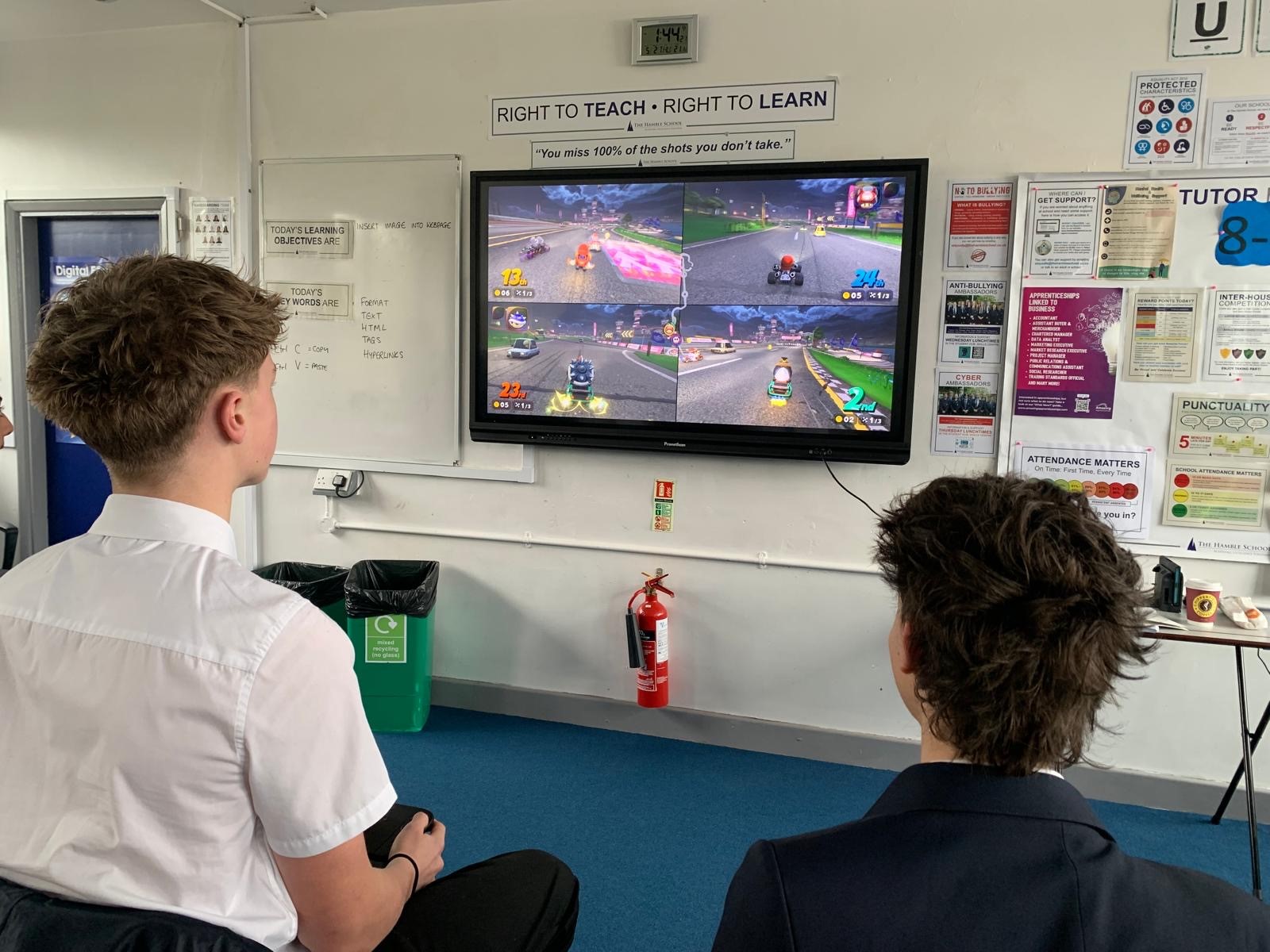
Finally, congratulations to everyone who took part in the House Mario Kart Competition. The enthusiasm and friendly competition were fantastic to see, and it was a brilliant reminder of the fun and togetherness that sits at the heart of our House system.
We hope you enjoy the rest of this week’s message and join us in celebrating the many achievements across our school community.
Next week is WEEK 1
Question of the Week
Please select your answer in the form below, all fields marked * are required and to help prevent SPAM this form is protected by Google reCaptcha v3.
Each week we will ask Parents/Carers a question in the Weekly Message – this will either be about a topic we are focussing on or an aspect of our school improvement plan. We would appreciate it if everyone answers it when reading the Weekly Message.
Curriculum Information
You said that you would like more in depth information about curriculum areas. So once a fortnight we will now showcase a department and share a video about what students are learning. This week we will focus on Dance.
Curriculum Introduction: Dance
Events w/b Monday 9 February
Monday 9 February
Bike Registration 3pm-4:30pm in the Pavilion
Year 7 House Badminton Competition – Afterschool
Tuesday 10 February
Year 11 GCSE Drama Exam – Practical
Year 7 Mario Kart Competition – Lunchtime
Year 8 House Badminton Competition – Afterschool
Wednesday 11 February
Year 11 English Literature Mock Exam – AM
Mario Kart Finals – Lunchtime
Year 9 House Badminton Competition – After school
Year 9 Barcelona Parents’ Evening – 6pm in SC16
Thursday 12 February
Year 10 House Badminton Competition – After school
Friday 13 February
Year 11 English Literature Mock Exam – AM
Students finish at 3pm as normal.
Future Dates
Monday 16 February – Friday 20 February – Half Term
Monday 23 February – 8:30am – Students return to school for Spring Term 2.

Letters
Please read the letters sent home last week and available on our letters page: https://www.thehambleschool.co.uk/letters-to-parents/

Theme of the Week: Celebrating Success and Building Resilience
As we approach the final week before the half-term break, the atmosphere at The Hamble School is one of reflection and celebration. It has been a busy and productive few weeks, and we are looking forward to recognising the hard work our students have put into their studies and their personal growth.
Celebration Assemblies: Recognising Achievement
Next week, we will be holding our Half-Termly Celebration Assemblies. These are a highlight of our school calendar, providing a formal opportunity to celebrate students who have excelled in their lessons.
We will be recognising:
- Subject Commendations: For students showing exceptional effort or aptitude.
- Consistent Hard Work: For those who embody our school values every day.
- Positive Contributions: Celebrating those who make our classrooms a better place to learn.
Personal Development Programme: The Road to Success
You will hopefully see this week’s Parent Knowledge Booster that focuses on Children’s Mental Health, a topic that links in with Child Mental Health Week (https://www.childrensmentalhealthweek.org.uk/). The website has some excellent resources to help support Children’s Mental Health, with a particular focus on building resilience and overcoming barriers.
In Tutor Time, our Personal Development Programme theme focuses on Celebrating Success. However, we are also digging deeper into what “success” actually looks like and that overcoming failure is an essential part of this.
We will be discussing:
- Seeking Out Success: Encouraging students to be proactive and set ambitious goals for themselves.
- The Role of Failure: A vital part of our curriculum involves teaching students that failure isn’t the opposite of success—it’s a part of it. We want our students to view setbacks as feedback and opportunities to build resilience.
“Success is not final, failure is not fatal: it is the courage to continue that counts.” — Winston Churchill
The Student Leadership Award
To bring these themes to life, students will spend time next week reflecting on their Student Leadership Award (Levels 1, 2, and 3).
Students will be working in their Student Leadership Award Booklets to:
- Monitor Progress: Reviewing the criteria they have already met.
- Evidence Achievement: Reflecting on the leadership roles or community actions they’ve taken part in.
- Goal Setting: Planning their next steps to move toward the next level of the award.
The Student Leadership Award (SLA) is our innovative framework for recognizing how students lead in the classroom, across the school, and within the wider community.
Aligned with our core values—We care, We aim high, We learn and Achieve Together—the SLA focuses on ten key skills across three themes: Developing myself, Contributing to my community, and Working with others.
How it Works
Similar to the Duke of Edinburgh Award, students progress through Stages 1, 2, and 3, with each level requiring increased commitment and depth. Students take ownership of their development by:
- Self-Assessing: Evaluating their current skills against our leadership framework.
- Evidence Gathering: Building a portfolio of activities, such as attending clubs, volunteering, public speaking, or maintaining high “Attitude to Learning” (ATL) grades.
- Peer Moderation: Students peer-assess each other’s portfolios, reinforcing the collaborative nature of leadership.
Getting Started: Stage 1 Activities
At this initial level, we look for consistent engagement and a willingness to step outside one’s comfort zone. Activities include:
- School Engagement: Regularly attending an extra-curricular club or being part of a school sports team.
- Communication: Taking part in discussions, expressing ideas during Tutor Time, or presenting to an audience (like a class or tutor group).
- Service & Volunteering: Supporting the community through the School Council, acting as a Cyber Ambassador, or helping with charity events like a shoebox appeal.
- Academic Responsibility: Maintaining high standards of behaviour with ATL (Attitude to Learning) grades of 3 or better across two reports.
- Personal Growth: Setting personal goals in school planners and reflecting on progress made.
Why it Matters
Beyond the prestige of the award, the SLA helps students develop “all-round” achievement. It encourages critical self-reflection and organisational skills—competencies that are invaluable when applying for colleges, universities, and future employment.
We encourage you to talk to your child this weekend about their Leadership Booklet and ask which level they are currently aiming for!
Parent Knowledge Booster: Children’s Mental Health Week 2026
Children’s Mental Health Week 2026 takes place from 9–15 February 2026, and this year’s theme is “This is My Place”—a celebration of helping children feel they belong at home, at school, and in their community.
Feeling like they belong is important for every child’s mental health. It helps them feel valued, safe, and confident, which supports their emotional wellbeing and resilience.
What Children’s Mental Health Week Is All About
The week aims to raise awareness of children’s wellbeing and give them tools to understand, express, and manage their emotions. Schools and charities across the UK provide resources, activities and conversations to help children explore what belonging means to them.
You can join in at home by taking small steps to help your child feel connected and supported in their world.
How to Support Your Child’s Mental Health at Home
Here are simple ways you can create a sense of belonging and emotional security for your child:
- Encourage Open Conversations
- Let your child know it’s OK to talk about feelings—big or small. Many national resources encourage this kind of gentle, everyday conversation during the week.
Create a Safe, Predictable Home Routine
Routine helps children feel secure. Simple things like mealtimes, bedtime, and planning the day ahead can make a big difference.
Strengthen Their Sense of Belonging
This year’s theme focuses heavily on belonging—feeling part of family, school, friendships, and community. You can support this by:
- Talking about what makes your family special
- Celebrating your child’s strengths and interests
- Involving them in family decisions
- Encouraging safe friendships and community activities.
Model Calm, Positive Coping Strategies
Children learn from what they see. Using simple wellbeing habits at home—like taking a walk, doing a calming activity, or pausing for deep breaths—helps them build resilience. National wellbeing advice emphasises everyday self‑care.
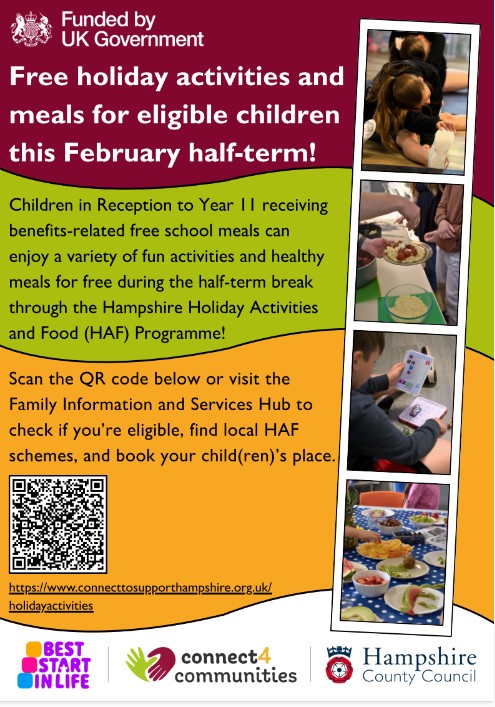
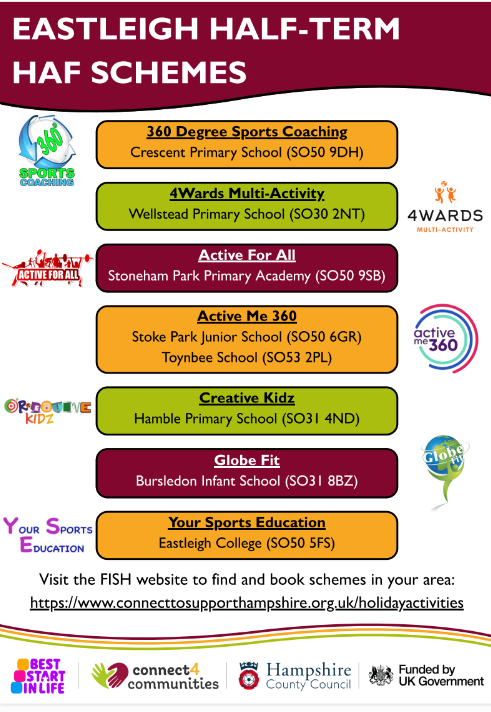
Helping Your Child Stay Safe & Well Over February Half Term
School holidays can be fun, but they can also bring changes in routine that affect children’s wellbeing. Here are helpful ways to prepare:
- Keep Some Daily Structure
A relaxed routine is fine, but predictable elements—like bedtime or mealtime—help children feel emotionally steady.
- Plan Opportunities for Social Connection
Children thrive when they feel connected. Playdates, visits to local clubs, or simple outings help maintain this sense of belonging. This links strongly to the campaign’s focus on friendships and community belonging.
- Make Space for Downtime
Quiet, restful moments are just as important. This could be reading, drawing, watching a favourite movie, or going for a nature walk.
Online Safety Tips for the Holidays
Children often spend more time online during school breaks.
You can support them by:
- Checking privacy settings together
- Talking about staying safe online
- Agreeing healthy screen‑time limits
- Encouraging regular breaks
- Knowing which platforms they use and who they interact with
What to Look Out For
Every child has ups and downs, but keep an eye on changes such as:
- Withdrawal or sudden quietness
- Increased anger or tearfulness
- Trouble sleeping
- Loss of interest in things they usually enjoy
Local and National Support Services
During Mental Health Week and beyond, schools, charities, and community services provide support for young people’s wellbeing. National guidance highlights a range of wellbeing training, advice lines, and supportive organisations available to families.
For further support and guidance, please see our website here: https://www.thehambleschool.co.uk/getting-mental-health-support-parents You can also request to speak to a Progress Leader via: https://www.thehambleschool.co.uk/report-concerns/
Staying Safe Over Half Term
If you need support over the half‑term break, help is available.
Hampshire Residents (e.g. SO31)
- Hampshire Children’s Services: 0300 555 1384
Mon–Thu 8:30am–5pm, Fri 8:30am–4:30pm - Out of hours: 0300 555 1373
Southampton Residents (e.g. SO19)
- Southampton Children’s Resource Service: 023 8083 3004
Mon–Thu 8:30am–5pm, Fri 8:30am–4:30pm - Out of hours: 023 8023 3344
School Contacts
- Our staysafe@thehambleschool.co.uk inbox and “Report It” buttons will not be checked regularly over the half‑term break.
In an Emergency
If a child is in immediate danger, call 999.
Additional Support
- Childline: 0800 1111
- NSPCC Helpline: 0808 800 5000
Mobile Phones
The Government has recently issued Guidance to all school on the use of mobile phones. The Hamble School does not allow the use of mobile phones or smart watches at any time during the school day. Mobile phones and/or smart watches may be stored in the student’s bag or in the student’s allocated school locker; they must not be stored in the pocket of clothing e.g. blazer or trousers.
Any student in breach of the policy outlined above will have their mobile device confiscated. Students who have their mobile phone confiscated more than twice may be required to hand in their mobile phone at the start of every school day. Students who are in Internal Suspension must hand their mobile phone to staff at the start of the day.
For further information, please read https://www.thehambleschool.co.uk/wp-content/uploads/2025/11/Mobile-Phone-Policy-Feb-2026.pdf
Uniform Standards
We would like to remind families of some of our key uniform expectations:
- If students choose to wear a school skirt, it must not be rolled up around the waist and must be worn at knee length.
- Blazers must be worn at all times when moving around the school site, including during break and lunch.
- Jumpers cannot be worn in place of a blazer.
If a child breaches these rules, they may be placed on a Uniform Report and issued with a sanction in line with our Uniform Policy.
If you require support with uniform, please use the following form: Request for uniform support – Fill in form
Bike Registration
A reminder that this will take place on Monday 9 February at between 3pm -4:30pm in the Pavilion.

Safe Travel To and From The Hamble School
We would like to remind all students and families about the importance of travelling safely to and from school. Recently, a few members of the public have contacted us with concerns about unsafe behaviour from a small minority of students on the roads and footpaths. Ensuring every student gets to school and home again safely is a shared responsibility and we appreciate your support in reinforcing these expectations.
For Cyclists
Cycling is a healthy and environmentally friendly way to travel, but it must be done safely and responsibly. Students cycling to and from school should:
- Wear a helmet at all times.
- Use cycle paths wherever possible.
- Ride single file on narrow or busy roads.
- Dismount and walk bikes when crossing busy junctions or entering the school site.
- Use lights and reflectors during darker mornings and afternoons.
- Never use phones or earphones while cycling, as they reduce awareness and reaction time.
For Pedestrians
Students walking to school must also take care, especially at busy times. Pedestrians should:
- Use pavements and designated crossings—never step into the road between parked cars.
- Wait for traffic to stop fully before crossing.
- Walk, don’t run, when crossing roads or entering/exiting the site.
- Stay alert at all times by avoiding headphones and not using mobile phones while crossing roads.
- Walk sensibly in groups, without pushing or drifting into the road.
Using mobile phones when near roads is particularly dangerous. Looking at a screen, even for just a few seconds, significantly reduces awareness of traffic, cyclists and other pedestrians.
Shared Responsibility and Community Awareness
We are proud to be part of a community that looks out for one another and we want members of the public to feel reassured that our students are acting safely and respectfully.
Unsafe behaviour—such as stepping into the road without looking, cycling unpredictably, wearing earphones near traffic or looking at mobile phones while crossing—puts students at real risk. We are addressing these concerns directly in school through our Personal Development Programme, and your support at home makes a real difference.
The journey to and from school is an important part of the day, and safety must always come first. Thank you for helping us ensure every student travels safely, responsibly and with consideration for others.
If there is anything you would like to discuss regarding travel routes, safety concerns or support for students, please contact the school via general@thehambleschool.co.uk
National Apprenticeship Week – Skills for Life
National Apprenticeship Week (NAW) is an annual nationwide celebration recognising the incredible impact apprenticeships have on individuals, employers and the wider economy. It provides an important opportunity to highlight apprenticeships as a high‑quality, credible and aspirational pathway for young people—one that offers genuine alternatives to more traditional routes.
Apprenticeships offer students the chance to:
- Gain hands‑on experience in the workplace
- Earn a wage while learning
- Obtain nationally recognised qualifications
- Develop transferable skills for life
- Build contacts, confidence and industry insight
For many young people, apprenticeships offer a direct route into employment, often leading to long‑term career opportunities with the companies they train with. They are also available at a wide range of levels—including Higher and Degree Apprenticeships—making them an attractive option for students aiming for advanced qualifications without the cost of university tuition fees.
This year’s theme, Skills for Life, highlights how apprenticeships equip young people with the knowledge, experience and attributes needed to thrive in the modern workplace. Throughout the week, students will have the chance to engage in a variety of activities designed to inform, inspire and help them explore the many exciting routes available.
To find out more about National Apprenticeship Week, please visit the official website here: https://naw.appawards.co.uk/
Information for Parents and Carers
NAW is not only aimed at students—it’s also a fantastic opportunity for Parents and Carers to learn more about how apprenticeships can support their child’s future success. Understanding the range of pathways available can make a huge difference when supporting young people with important decisions about education, training and careers.
To support families, Amazing Apprenticeships are hosting a dedicated Parent/ Carer Webinar:
- Friday 9 February
- 6:30pm
- Register here: https://www.amazingapprenticeships.com/events/navigate-national-apprenticeship-week-parent-and-carer-webinar-understanding-apprenticeships/
This session will explain how apprenticeships work, the types of roles available, entry requirements, progression routes and how to help your child explore their options.
Year 11 Mock Exams
Our Year 11 students begin their written Mock Exams on Wednesday 11 February with English Literature. This is a valuable chance to practise the full exam experience, refine revision habits and identify next steps before the summer series.
Why Mock Exams Matter
Mock exams help students build the skills they need for success: time management, memory and recall, critical thinking, communication, problem‑solving, organisation, planning and resilience. They also mirror the real GCSE experience, so everyone knows exactly what to expect and we can resolve any access‑arrangement logistics in advance.
Mock Exam Timetable & Line‑Up: What to Expect
- Check the Mock Exam Timetable (shared with students and through email) – A copy can be found here: https://www.thehambleschool.co.uk/examination-information/
- Know your seating before you line up (row and seat number).
- Bags go into the exam container on the shelf that matches the first letter of your surname.
- Once you leave the container, you are in exam conditions and must be silent.
- Line up by your seat/row for the Main Hall or, if you’re in the Skills Centre, line up to the left of the exam line‑up area. Silence is non‑negotiable.
Equipment
- Clear pencil case with the essentials – two black pens are a must.
- Ensure you have a calculator for the Maths calculator exam and some other exams such as Science and Geography.
- No watches of any kind; empty pockets.
- Phones must be in bags, not pockets.
- Water in a clear, label‑free bottle is allowed.
In the Exam Room
- Stay silent from line‑up all the way to your seat and while instructions are given. Start when told; timings are displayed in the room.
- At the end, follow the Exams Officer’s instructions; papers will be collected before you leave.
- You may speak only after you exit the hall and have collected your bag.
Rules You Must Follow
- Rules are set by the awarding bodies/JCQ.
- Malpractice (e.g., writing on hands/arms/desks) can lead to disqualification.
- Keep pockets empty, no heads on desks.
- Disruption is treated seriously and will be sanctioned.
Who’s Here to Help
Your support network includes Mrs Emmett‑Callaghan (Progress Leader), Mr Wood (Y11 SLT link), tutors, subject teachers, support staff, parents/carers and peers. Please ask us if you have any questions.
Revision: Make It Count
- Find out what you need to know – Use the information handed out at Parents’ Evening, ask your teachers, check Class Charts, and use the revision lists/ guides.
- Plan quiet, focused sessions and practise different revision techniques (e.g., self‑quizzing, past‑paper questions, flashcards, timed practice).
- Use the Mock Exam Timetable to build a day‑by‑day plan that balances subjects and includes breaks.
Final Word
You’ve got this. Give each paper an honest effort, follow the rules, and walk out of every exam knowing you’ve done your best. Good luck.
School Toilets: Expectations, Access and Support for Students
Recently, we have been altered to some discussions on social media from Parents/ Carers regarding student access to toilets during the school day. We appreciate that families want reassurance that students are supported, treated fairly and able to learn comfortably. We hope the following information helps clarify our approach.
Toilet Use During Lessons
Our priority is always to maintain a calm and focused learning environment. Frequent movement in and out of classrooms to go to the toilet disrupts teaching and learning for both the student leaving the room and the rest of the class.
For this reason, we expect all students to use the toilets before school, at break, at lunch or after school, rather than during lessons.
However, we fully understand that genuine emergencies happen. If a student is desperate and unable to wait, staff will allow them to use the toilet during a lesson. In these cases:
- The member of staff will sign the student’s planner to record the toilet visit.
- This system ensures access when needed while helping us identify any patterns or concerns we may need to support the student with.
Medical Needs and Toilet Passes
Students with a medical condition that affects their ability to wait until breaks or lunch for toilet access can receive a toilet pass. To issue a pass, we require medical evidence, such as a note from a GP or relevant health professional.
This ensures that students with ongoing medical needs receive the support they require, while preventing misuse of the pass system.
Designated Toilets for Break and Lunch
Each year group has allocated toilets during break and lunch times. This helps:
- Manage the number of students in each space
- Reduce overcrowding
- Promote safer, calmer corridors
- Ensure toilets remain clean and accessible
Clear signage is in place, and staff are available to guide students if needed.
Periods and Support for Menstruation
We want all students who experience periods to feel supported and comfortable at school. Periods are not a reason to stay at home and we have several measures in place to help students manage them with confidence:
- Sanitary products are available free of charge in the Medical Room
- Students can speak discreetly to staff if they require support
- If a student needs to visit the toilet due to menstrual needs, staff will allow this—with discretion and understanding.
We aim to ensure that no student feels embarrassed or worried about managing their period while at school.
Football Update from PE Department
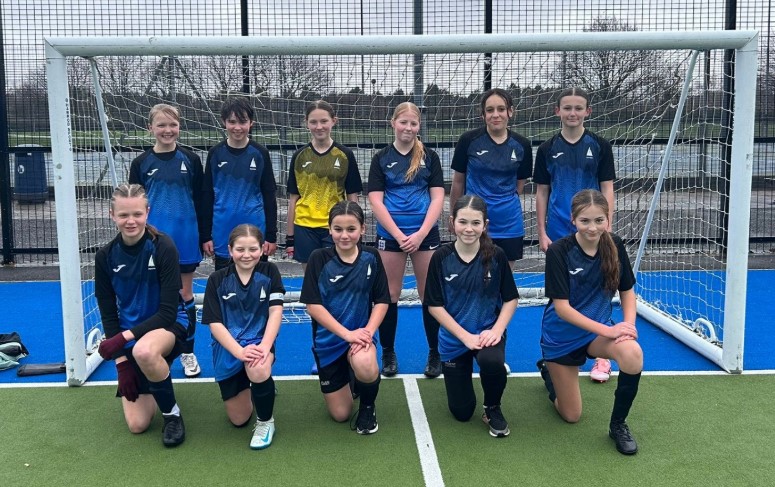
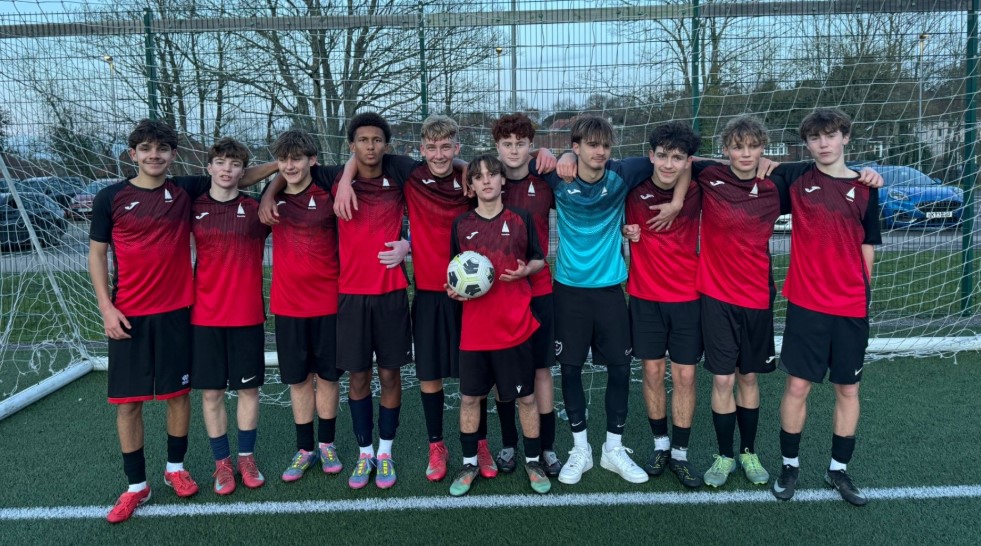
It has been a fantastic week of football across The Hamble School, with our teams demonstrating skill, determination and brilliant sportsmanship. From strong league performances to impressive individual displays, our students continue to represent the school with pride. Here’s a roundup of the latest results:
Year 7/8 Girls: 5–2 Win vs St Marks
The Hamble School Year 7/8 girls began their league season in style with a 5–2 home win against St Marks. After twice falling behind, the team showed great resilience. Goals from Pollyanna (2), an own goal, Eva and Darcey completed a strong comeback. A dominant second half saw The Hamble School take full control, with confident attacking play and solid defending.
Year 7/8 Girls: 7–0 Win vs The Gregg School
The girls made it two wins from two with a convincing 7–0 victory over The Gregg School. Pollyanna scored four first‑half goals, supported by disciplined defending from Scarlett A, Ciara and Pearl. Ciara added two goals of her own and Jess scored one before showing fantastic sportsmanship by volunteering to help the opposition. It was a positive all‑round performance with chances for many players to get involved.
Year 10 Boys: 3–1 Win vs Bitterne Park
The Hamble School Year 10 boys secured a much‑needed 3–1 win away at Bitterne Park. With only 11 players available, the team defended superbly in the first half, with standout performances from Jakub in goal and Elliot at the back. After going 1–0 down, The Hamble School responded brilliantly through goals from Kristof (2) and Sam B. A resilient and fully deserved victory.
Celebrating Achievements
The students listed below achieved the most reward points this week – Well done to you!
- Year 7 – Sofia B 7-4
- Year 8 – Ava W 8-5
- Year 9 – Mia T 9-8
- Year 10 – Dulcie T 10-6
- Year 11 – Oliver P 11-7